
Planning a summer road trip sounds simple enough at first. Pick a place, pack the bags, gas up the car, and cue the classic road trip playlist. Easy, right?
Then reality kicks in.
Hotel prices start climbing. The national park you want to visit requires reservations. Someone mentions that your travel dates overlap with a major festival, a holiday weekend, or (in our case) the 250th birthday of the United States in Boston. Suddenly, planning a summer road trip feels less like a carefree adventure and more like you’ve been handed a clipboard, a whistle, and responsibility for family morale.
But here’s the good news: you don’t have to plan every minute.
In fact, some of the best family road trips are built around a simple framework: one big idea, a reasonable budget, a smart route, good lodging choices, and enough breathing room for the unexpected. That’s the sweet spot, organized enough to avoid chaos, flexible enough to let the trip become a story.
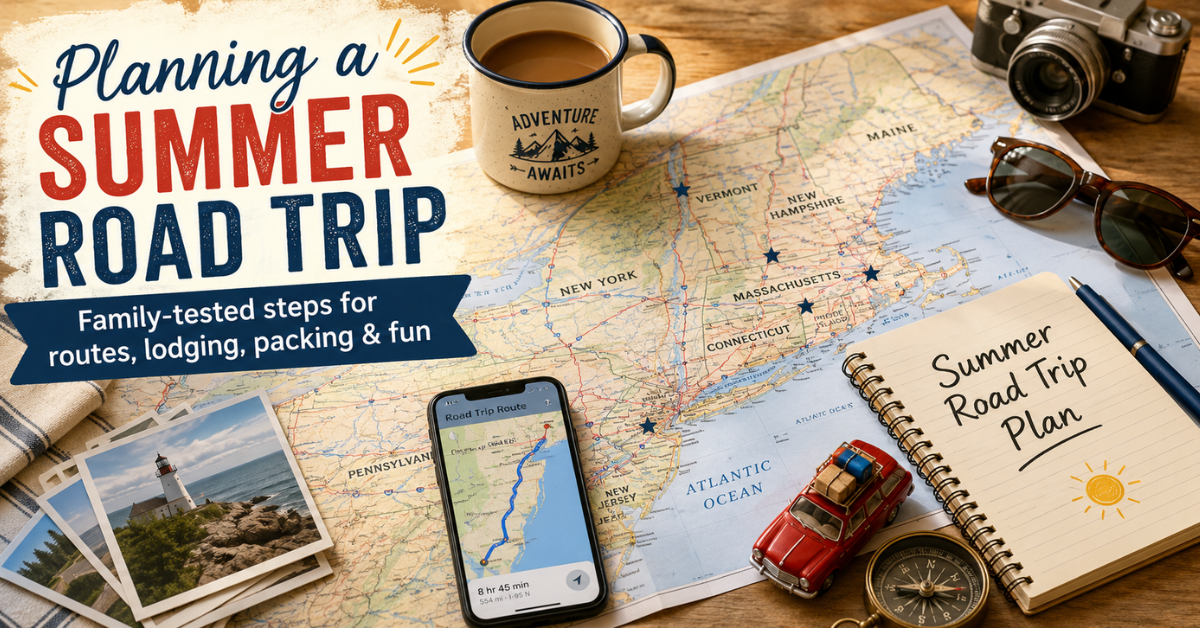
Here’s how I start planning a summer road trip for my family, using our upcoming New England adventure as the real-world example.
Disclaimer: This post may contain affiliate links, which means I may receive a commission if you purchase through my links, at no extra cost to you. See my Full Disclosure for details. Thank you for your supporting my site!
Step 1: Define Your Summer Road Trip Goals
Most of our trips don’t start with a fully baked itinerary.
They usually start with one sentence tossed out across the kitchen table:
“Let’s visit Acadia National Park” for instance.
That’s it. That’s the spark.
At this stage, I’m not worried about which restaurant we’ll eat at on Thursday night or whether we’ll take the scenic route through some tiny town with a general store, two church steeples, and a suspiciously good bakery. That comes later.
The first step in planning a summer road trip is figuring out the big purpose of the trip.
Are you trying to:
- Visit a national park?
- Spend time at the beach?
- See family or friends?
- Explore a city?
- Build a trip around a major event?
- Give the kids a mix of adventure, history, and downtime?
- Revisit a place from your own childhood?
For our New England trip, Acadia was the anchor. After that was on the map, the rest of the trip started forming around it.
We knew we wanted to travel during the last week of June and the first week of July. That immediately changed the planning equation. If we were going to be in New England over July 4th – during America’s 250th anniversary year – Boston suddenly became more than just “maybe we’ll stop there.” It became a major part of the trip.
And yes, I know the Boston fireworks are a big, crowded, wonderfully chaotic event. I’ve done it before without kids. Now I want mine to experience it too.
Sometimes the goal isn’t just “go somewhere.” Sometimes it’s “give the kids a memory they’ll still be talking about when they’re grown.”
Road Trip Tip: Start with one anchor destination or experience. Don’t worry about the full itinerary yet. The best trips often begin with one “must-do” and slowly grow from there.
Step 2: Determine Your Road Trip Budget
Once you know the general shape of the trip, it’s time to talk money.
Not the most romantic part of travel planning, I know. Nobody wants to dim the glow of “summer adventure” with a spreadsheet. But a little budgeting early can save you from that awful moment when you realize your “simple family getaway” has quietly become a financial ambush wearing flip-flops.
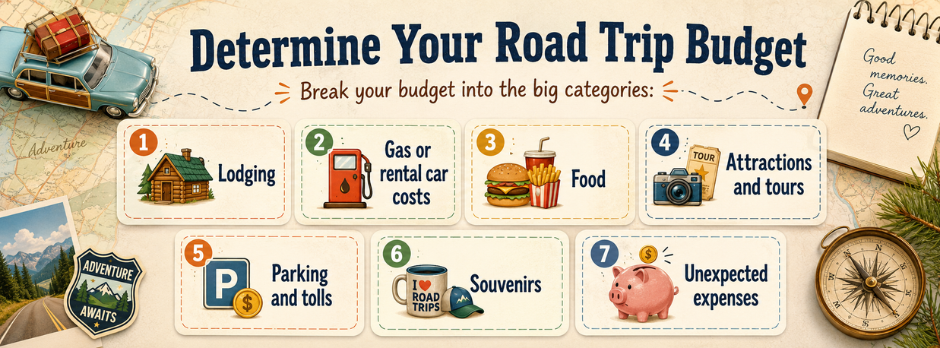
Break your road trip budget into the big categories:
- Lodging
- Gas or rental car costs
- Food
- Attractions and tours
- Parking and tolls
- Souvenirs
- Unexpected expenses
The biggest swing factor is usually lodging. Moreover, some destinations are just expensive in peak summer. Bar Harbor, Maine is a great example. It’s one of the main gateways to Acadia National Park, and in summer, good-value hotels in good locations can disappear fast.
That doesn’t mean you can’t go, rather it means you need to plan with your eyes open.
One trick I like is blending costs across the whole trip. Maybe you splurge for a great hotel in a high-demand destination for a few nights, then balance it with a cheaper stay somewhere else.
For example, a $700-per-night hotel sounds painful on its own. But if you pair that with four nights of camping under $50 per night, your average nightly cost drops dramatically. Suddenly the splurge doesn’t feel quite as wild.
Road Trip Tip: Don’t judge each night in isolation. Look at your total lodging average across the full trip.
Need help estimating fuel, lodging, food, and attraction costs? Try my Road Trip Budget Calculator before you start booking.
Step 3: Choose Your Destinations and Map the Route
This is where planning a summer road trip starts to become real.
Now that you have your anchor destination and rough budget, start looking at the route. Not just the fastest way there – the best way there.
For our summer trip, we decided to fly into Portland, Maine, rent a car, and work our way up the coast before heading toward Acadia. Flying into Portland instead of Boston gave us a better starting point for the Maine portion of the trip and saved us from immediately dealing with big-city logistics.
Here’s how the thought process unfolded.
We wanted a nearly two-week trip during the last week of June and first week of July. Because that lined up with July 4th in New England during America’s 250th anniversary year, Boston quickly became a priority.
Therefore, Portland made sense as the starting point. Our flight would arrive in the afternoon, and I didn’t want our first day to become a tired, cranky, “why did we do this?” kind of push.
So we booked our first night outside Camden.
That one decision gave us a first-day plan with just enough adventure:
- Pick up the rental car in Portland
- Grab lunch
- Stop at Portland Head Light for the classic Maine lighthouse photo
- Visit the L.L.Bean flagship store in Freeport
- End the day with a waterfront dinner and evening stroll near Camden
I don’t like planning every minute of every trip, but I do like making the first day feel special. It sets the tone. It tells the family, “We are officially on an adventure now.”
For Acadia, we wanted enough time to actually enjoy the park. One mistake families make is underestimating how little time they really have at a destination.
Remember this rule:
Two overnight stays usually gives you one full day.
If you arrive Monday night and leave Wednesday morning, Tuesday is your only real day. That might be fine for a quick stop, but for a national park like Acadia, we wanted more breathing room. So we chose five nights.
After Acadia, the drive back toward the Boston area is a solid travel day. We’ll break it up with some spontaneity – maybe a small-town lunch stop, a scenic pull-off, or whatever roadside curiosity earns the family vote. For this day I’ll be sure to have some in car entertainment!
Then we’ll spend a couple of nights just outside Boston to see friends and family before checking into our city hotel.
And here’s one of my favorite city-trip moves: ditch the car.
Once we check into Boston, I plan to return the rental car so we can avoid parking fees and rely on public transit, walking, and rideshare when needed. In a city like Boston, keeping a rental car can feel less like freedom and more like babysitting an expensive metal suitcase.
Road Trip Tip: Build your route around energy, not just mileage. A five-hour drive with a great lunch stop and a scenic detour can feel better than a four-hour slog with no plan.
Step 4: Book Lodging Early – Especially for Peak Summer Trips
Lodging can make or break a summer road trip.
I know that sounds dramatic, but anyone who has tried to find a reasonably priced family hotel room near a national park in July knows the truth. The good places disappear early. The decent places get expensive. The “how bad could it be?” places start looking suspiciously available.
For our New England trip, I started planning in August of the previous year. That might sound early, but the timing made it necessary.
We had two big considerations:
- First, our destinations mattered. Bar Harbor and Boston are both high-demand summer locations.
- Second, the timing mattered even more. We were traveling around July 4th during America’s 250th anniversary year, with major events expected across Massachusetts. Boston Harborfest is scheduled for July 2–4, 2026, and Sail Boston/Tall Ships events are scheduled for July 11–16, 2026. The region is also preparing for FIFA World Cup-related activity in summer 2026. In other words, Boston is not exactly flying under the radar that summer.
So I booked refundable hotel options early. That’s the key: refundable.
A refundable reservation gives you a safety net. You lock in a reasonable price, then keep checking as the trip gets closer. If something better appears, you can adjust. But if prices climb, you’re protected.
For this trip, I was fortunate enough to book both my Boston and Bar Harbor hotels for under $300 a night. As I planned additional pieces of the trip, I kept checking other lodging options.
The price never went down.
By about 45 days out, Bar Harbor rooms were nearly gone, and Boston hotels were pushing $500 a night or more in many desirable areas.
That’s why lodging is one of the first things I book for a peak summer trip. Flights, rental cars, and activities matter too, but lodging in the right location often has the biggest impact on the overall trip experience.
Hotels, Vacation Rentals, or Camping?
There’s no single right answer. It depends on the trip.
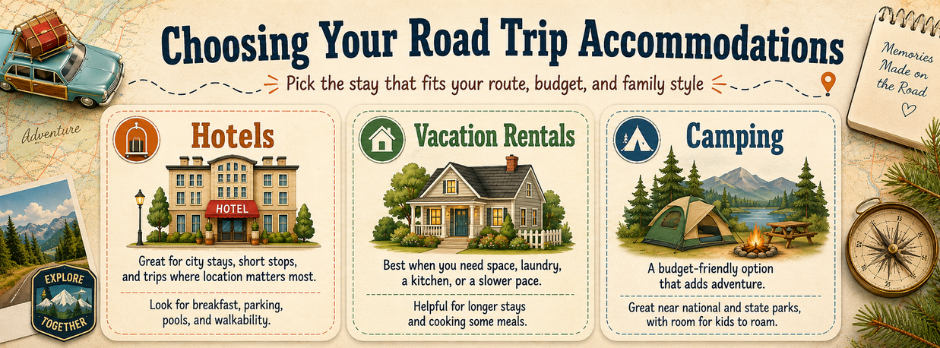
Hotels are great for city stays, short stops, and trips where location matters most. Breakfast, parking, pools, and walkability can all make a big difference for families.
Vacation rentals shine when you need space, laundry, a kitchen, or a slower pace. They can be especially helpful for longer stays or trips where you want to cook some meals instead of eating out constantly.
Camping can stretch the budget and add adventure, especially near national parks or state parks. It also gives kids room to roam, which can be worth its weight in marshmallows.
For many family road trips, the best answer is a mix.
Maybe you stay in a hotel for the city portion, a vacation rental for the slower middle stretch, and a campground for a budget-friendly outdoor adventure. The goal is not to pick the “best” lodging type. The goal is to pick what fits each part of the trip.
What I Look for Before Booking
For family trips, I care about:
- Location and drive time
- Parking fees
- Breakfast options
- Laundry access
- Room size
- Pool or outdoor space
- Cancellation policy
- Walkability
- Reviews from other families
- Hidden fees
Parking is the sneaky one. A hotel that looks affordable can become much less appealing when you add $45–$70 per night for parking.
That’s one reason I like dropping the rental car before a city stay whenever possible.
Road Trip Tip: For peak summer destinations, book refundable lodging as soon as your dates are likely. You can always adjust later, but you can’t go back in time and grab the good-value room everyone else already booked.
Step 5: Pack for the Trip You’re Actually Taking
Packing for a summer road trip is not just about clothes. Instead, it’s about matching your gear to the kind of trip you’re planning.
A beach trip, a national park trip, a city trip, and a multi-stop New England adventure all require slightly different packing strategies. The mistake is packing like every summer trip is the same.
For our Maine and Boston trip, we’ll need a mix:
- Comfortable drive-day clothes
- Walking shoes for Boston
- Hiking clothes for Acadia
- Light layers for cool coastal mornings
- Rain jackets
- Casual dinner outfits
- Chargers and car accessories
- Snacks and refillable water bottles
- Daypack supplies for national park days
New England weather can be a little mischievous. You might get sunshine, fog, wind, rain, and a perfect golden-hour harbor view all in the same day. So layers matter.
For road trips, I also like separating packing into zones.
The Suitcase Zone
This is your normal clothing and overnight gear. Clothes, toiletries, pajamas, extra shoes, and anything you only need once you arrive at lodging.
The Car Zone
This is the stuff you want within reach while driving:
- Phone chargers
- Sunglasses
- Snacks
- Water bottles
- Tissues and wipes
- Trash bags
- First aid basics
- Travel games
- Headphones
- Printed reservation details
- Sweatshirt or blanket
The Day Trip Zone
This is the grab-and-go bag for hikes, museums, beaches, and city exploring:
- Water bottles
- Sunscreen
- Bug spray
- Portable charger
- Light snacks
- Rain jacket
- Bandages
- Hand sanitizer
- Small towel
- Any tickets or passes
This is especially important when you’re renting a car or flying before your road trip begins. You may not be able to bring every bulky item from home, so prioritize the small things that make the trip smoother.
And yes, I still believe in having some non-screen entertainment ready. Even with teenagers, there are moments when a simple game, playlist, or “everybody look out the window for a second” challenge saves the mood.
Road Trip Tip: Don’t just pack by person. Pack by use: suitcase, car, and day trip bag.
Step 6: Plan the Big Fun Before You Go
Some parts of a road trip are best left spontaneous.
A roadside diner. A weird museum sign. A scenic overlook. A small-town ice cream stand that somehow becomes the family’s favorite stop.
But the big-ticket summer activities? Those often need advance planning.
During peak travel season, you may need reservations for:
- National park entry or scenic road access
- Popular tours
- Boat trips
- Museums
- Special events
- Holiday activities
- Hard-to-get restaurants
- Timed-entry attractions
For Acadia, that might mean watching for vehicle reservations, sunrise access, boat tours, or popular dining times. For Boston over July 4th, it means thinking through crowds, transit, walking distances, and what we really want the kids to experience.
My rule is simple:
Book the things that would truly disappoint you to miss. Leave the rest flexible.
That keeps the trip from becoming over-scheduled while still protecting the experiences that matter most.
For our family, that means locking in the big stuff – national park plans, key lodging, July 4th logistics, and maybe a few special meals – while leaving room for discoveries along the way.
Because sometimes the best memory is not the thing you booked.
Sometimes it’s the stop you almost skipped.
Road Trip Tip: About 30–60 days before your trip, make a reservation checklist. Look at national parks, tours, restaurants, museums, and special events.
Step 7: Leave Room for the Summer Road Trip Magic
This is the part I have to remind myself of every time.
The goal is not to create a perfect itinerary.
The goal is to create a trip your family will remember.
There’s a difference.
A perfect itinerary tries to control every hour. A memorable road trip gives the family enough structure to feel confident and enough space to stumble into something wonderful.
That might mean skipping a planned stop because everyone is tired. It might mean spending an extra hour in a bookstore, a lighthouse gift shop, or a small harbor town because the weather is perfect and nobody wants to leave.
It might mean the kids remember the hotel pool more than the historic landmark you carefully researched for three evenings.
That’s okay.
Actually, that’s kind of the point.
Build the bones of the trip. Choose the anchor destination. Book the lodging that matters. Pack smart. Reserve the activities you’d hate to miss.
Then let the road do some of the storytelling.
Road Trip Tips for Getting There
Final Thoughts on Planning a Summer Road Trip
Planning a summer road trip doesn’t have to mean mapping out every bathroom break from here to the state line.
Start with one big goal. Build a realistic budget. Choose a route that gives your family room to enjoy the journey. Book important lodging early, especially for national parks, beach towns, and major holiday weekends. Pack for the trip you’re actually taking. Reserve the big experiences before they sell out.
Then leave a little space.
Space for the scenic detour. Space for the roadside pie stand. Space for the kids to surprise you by loving something you almost skipped.
That’s where the road trip memories usually hide.
And when all else fails, remember the unofficial family road trip motto: snacks fix a lot.